What Are Fiber Prep Tools? Carders, Combs and More Explained
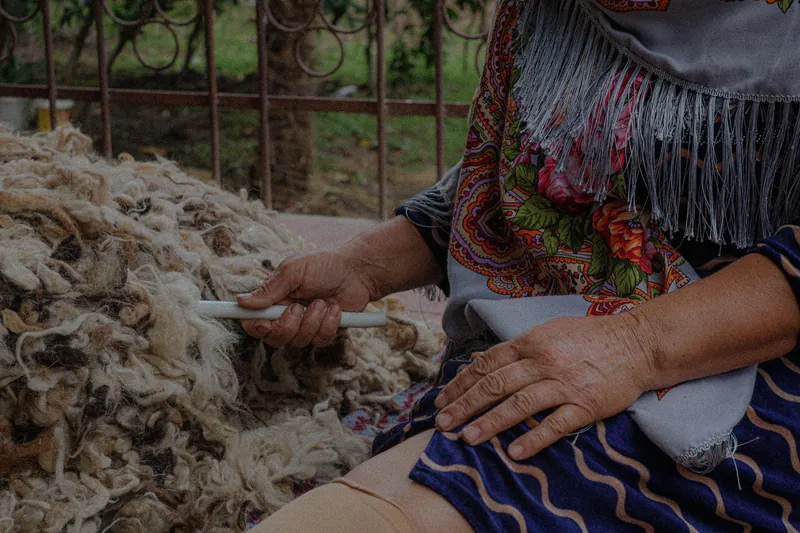
Fiber prep is the work of getting fiber ready to spin. A fleece comes off the sheep tangled, with dirt, plant bits and the natural grease in it, and spinning is smoother when the fibers have been cleaned and made to lie the same way. The tools here do that, and each one leaves the fiber in a different shape. If you are new to the craft, what is spinning shows where preparing fits.
Why prepare fiber
Carding, the main kind of prep, disentangles, cleans and intermixes fibers, and lines them up. Lined-up fibers are easier to draft, which means pulling out a few fibers at a time so only that amount takes the twist. Ashford’s booklet links the two: when yarn overtwists, one fix is to draft faster, and it notes that this may need better-prepared fiber.
Fiber is also washed first. Wool carries lanolin, its natural grease. Wash it before carding: lanolin makes carding hard and can damage the carder’s teeth, and dirt and grease shorten a carder’s life.
What each tool is, and what it makes
Two words come up everywhere. A staple is the length of a lock of wool, or of a single fiber. Carding cloth is the strip of fine wire teeth that covers a carder, and the teeth do the work.
| Tool | What it is | What it makes |
|---|---|---|
| Hand carders | A pair of brushes, one held in each hand | A rolag, a small roll of fiber |
| Flick carder | A brush that looks like a dog brush | Fiber with its lock tips opened, or fiber with the shorter bits brushed out |
| Combs | Tools with rows of steel pins | Top or sliver (a ready-to-spin strip of fiber), with the short fibers removed |
| Hackle | Rows of steel pins on a base, clamped to a table, for combing and blending | Aligned fiber, with most short fibers removed |
| Blending board | A board covered in carding cloth | Layered colors and fibers, then rolags |
| Drum carder | Two rollers covered in carding cloth, turned by a crank or a motor | A batt, a large, soft rectangle of fiber |
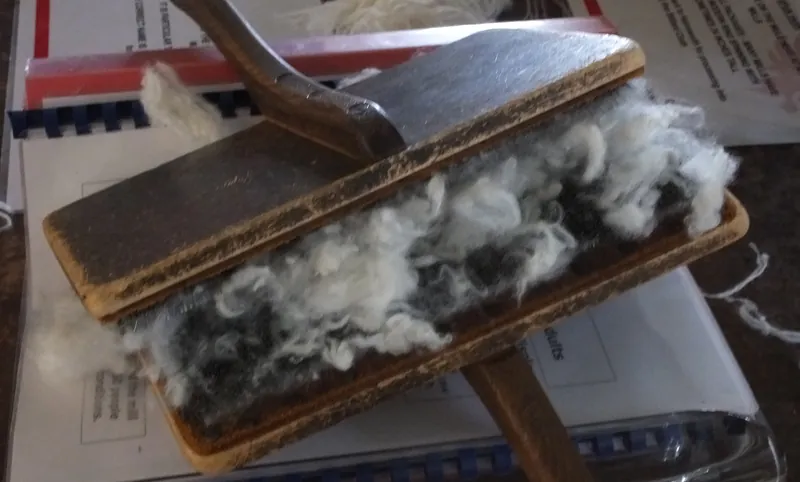
Hand carders smooth and straighten fiber by brushing it between the two brushes, and what comes off is a rolag. The fibers in a rolag lie across its length, not along it, which suits woolen yarn, the soft kind spun from short-stapled wool.
A flick carder is used on one lock at a time. You brush the lock’s ends, turn it over and brush the other end. The fibers end up lined up and the shorter ones come away, which suits worsted yarn, the firm kind spun from long-stapled wool with the fibers combed lengthwise. Ashford also uses it for a smaller job, teasing the tips of the staples apart before the fiber goes into a drum carder.
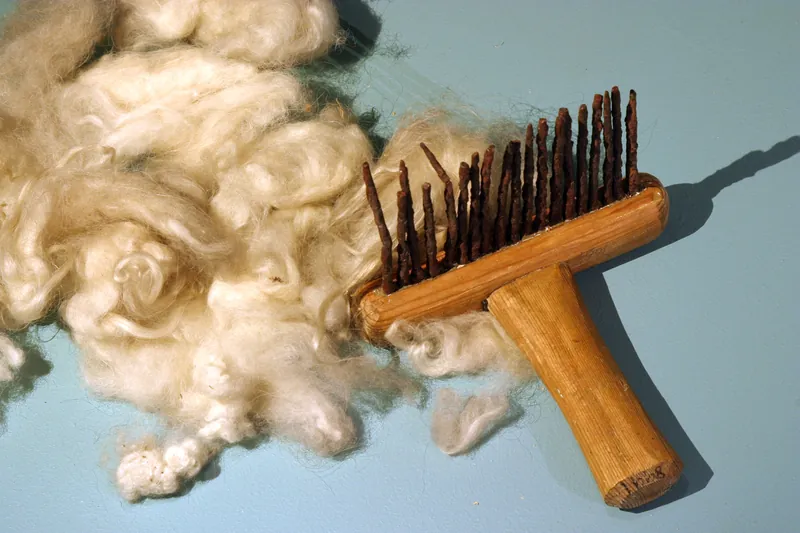
Combs suit long-stapled wool and worsted spinning. They line the fibers up, take out the short ones and leave the long ones, and Majacraft says they can also be used to blend. The hackle does a similar job: a single-row hackle lines fibers up for worsted and removes most of the short ones.
A blending board is for mixing. You lay down fibers and colors in layers, then lift off rolags, and the result is a blend you chose. Louet’s carding cloth measures 30 x 30 cm.
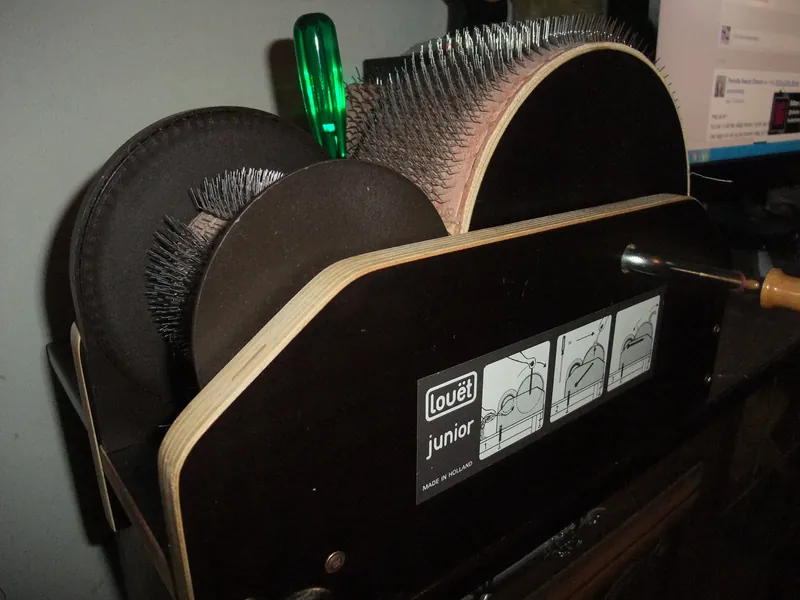
A drum carder is a carder built around a turning drum. You feed fiber in at the small roller, turn the crank, and the fiber collects on the large drum as a batt. Ashford’s drum carder has two ratios, 6:1 for preparing fleece into a smooth, even batt and 4:1 for blending sliver, colors and fiber types into an open, airy one. How to card wool with a drum carder takes you through the steps.
Names for the finished fiber vary a little between makers. Sliver is a ready-to-spin strip of fiber, and roving is much the same, a little smaller. Joy of Handspinning calls combed fiber top, and Majacraft calls it sliver.
Do you need any of these to start?
Not for a first lesson. Ashford’s beginner lesson uses about 50 g (1.5 oz) of wool sliver and no carding tool, because sliver is sold ready to spin, and pencil roving comes already drafted. Kromski’s spindle lesson begins by pre-drafting a small amount of roving, which means pulling it gently apart to loosen it.
The tools above come into play when you start from fleece or want blends of your own. They make sliver, rolags, batts and top from washed fleece, and blend colors and fibers into your own mixes.
What they cost
| Tool | Maker’s list price, 31 Oct 2026 |
|---|---|
| Strauch 6 in wool hand carders, per pair | $84 |
| Strauch 10 in cotton/fur hand carders, per pair | $95 |
| Louet blending board, carding cloth 30 x 30 cm | $272.69 |
| Strauch Petite drum carder | $595 |
| Louet Junior drum carder | $607.70 |
| Louet XL drum carder | $1,048.45 |
| Louet Electric XL drum carder, motorized | $2,940.55 |
A dealer can quote flick carders, combs and hackles.
Where to go next
- Using a drum carder: how to card wool with a drum carder.
- Comparing carders: fiber prep tools, side by side.
- Spinning itself: how to start spinning yarn, and what is a spinning wheel for the machine.
- New words: the glossary.
- The whole craft: start here.
FAQ
What does carding do?
It cleans, untangles and lines up fibers so they draft evenly, and it makes rolags on hand carders or batts on a drum carder.
What is the difference between carding and combing?
Carding smooths and mixes fibers into rolags or batts, and suits woolen spinning. Combing lines the long fibers up and removes the short ones, and suits worsted spinning.
Do I wash wool before carding?
Yes. Lanolin makes carding hard and can damage the carder’s teeth.
Further reading
- Carding, Wikipedia
- Glossary, types of fiber preparations and how to prepare fiber with a flicker carder, Joy of Handspinning
- Majacraft: combs and hackle
- Blending board and Junior drum carder, Louet
- Hints for carding, Strauch
- Drum carder manual, Ashford